A short introduction
What are fractals?
There is no single definition that captures every object mathematicians call a fractal. People often describe fractals as shapes whose detail continues to appear at smaller and smaller scales.
Many fractals are self-similar: they are made from smaller, scaled copies of themselves. Repeating a simple rule can produce intricate geometry. Many fractals have a non-integer dimension, although not every fractal is self-similar or has a non-integer dimension.
A quick idea of dimension
What does dimension measure?
Dimension is one way of describing how the amount of detail in a shape changes with scale. For an exactly self-similar shape, the similarity dimension compares the number of smaller copies with their size relative to the whole.
If the whole consists of N smaller copies of itself, each with linear scale factor 1/r, its similarity dimension d satisfies N = rd. Equivalently, d = log(N) / log(r).
The gasket's dimension lies between 1 and 2. Although it is more intricate than a line, its two-dimensional area is exactly zero: after n construction steps, the remaining area is (3/4)n times the area of the original triangle, and this tends to zero as n increases. Its two-dimensional Lebesgue measure is therefore zero. Hausdorff measure generalises length and area to arbitrary dimensions, including non-integer ones. At the gasket's dimension, d = log(3) / log(2), its d-dimensional Hausdorff measure is finite and positive.
Beyond mathematics
Fractals as art
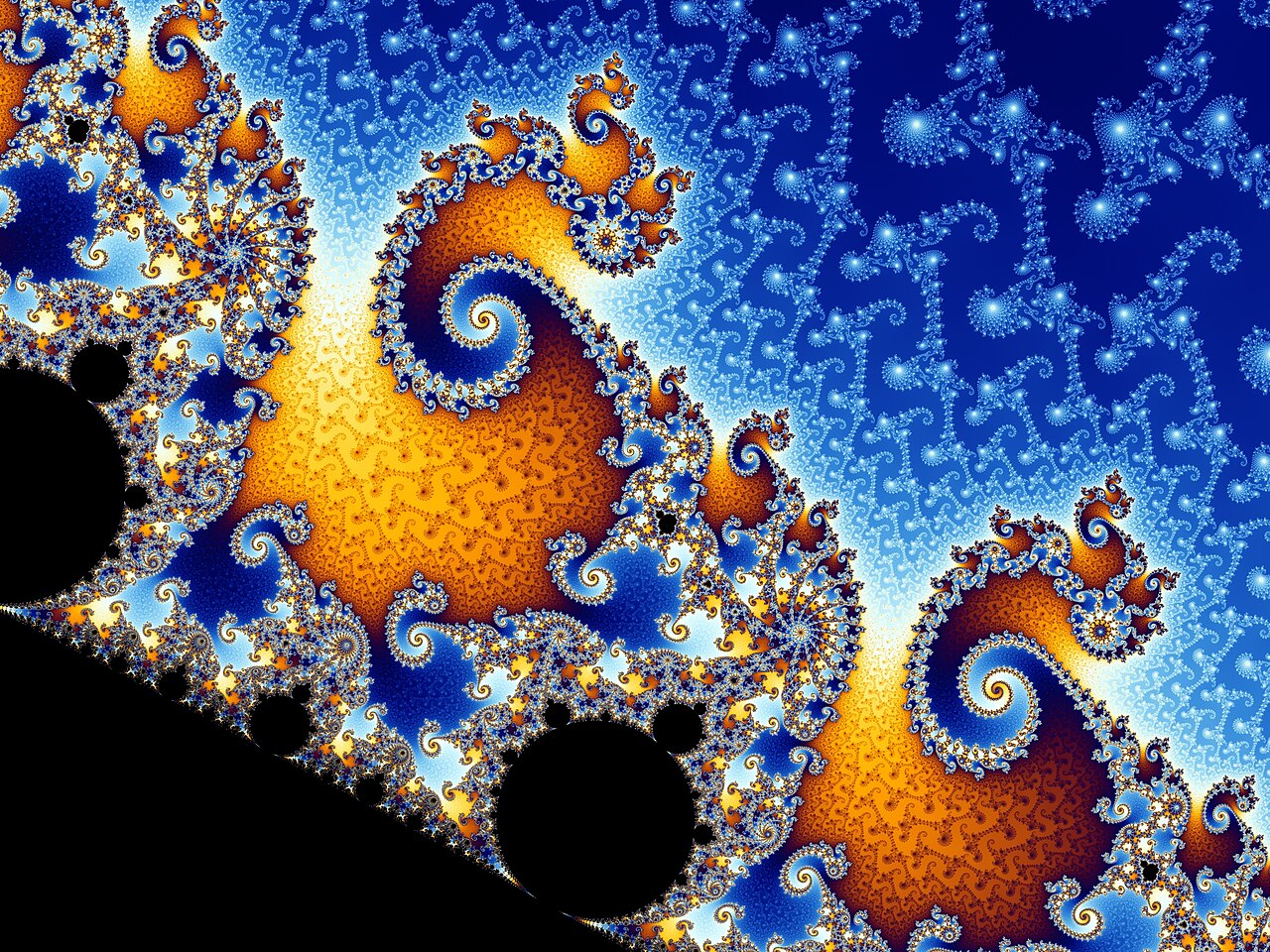
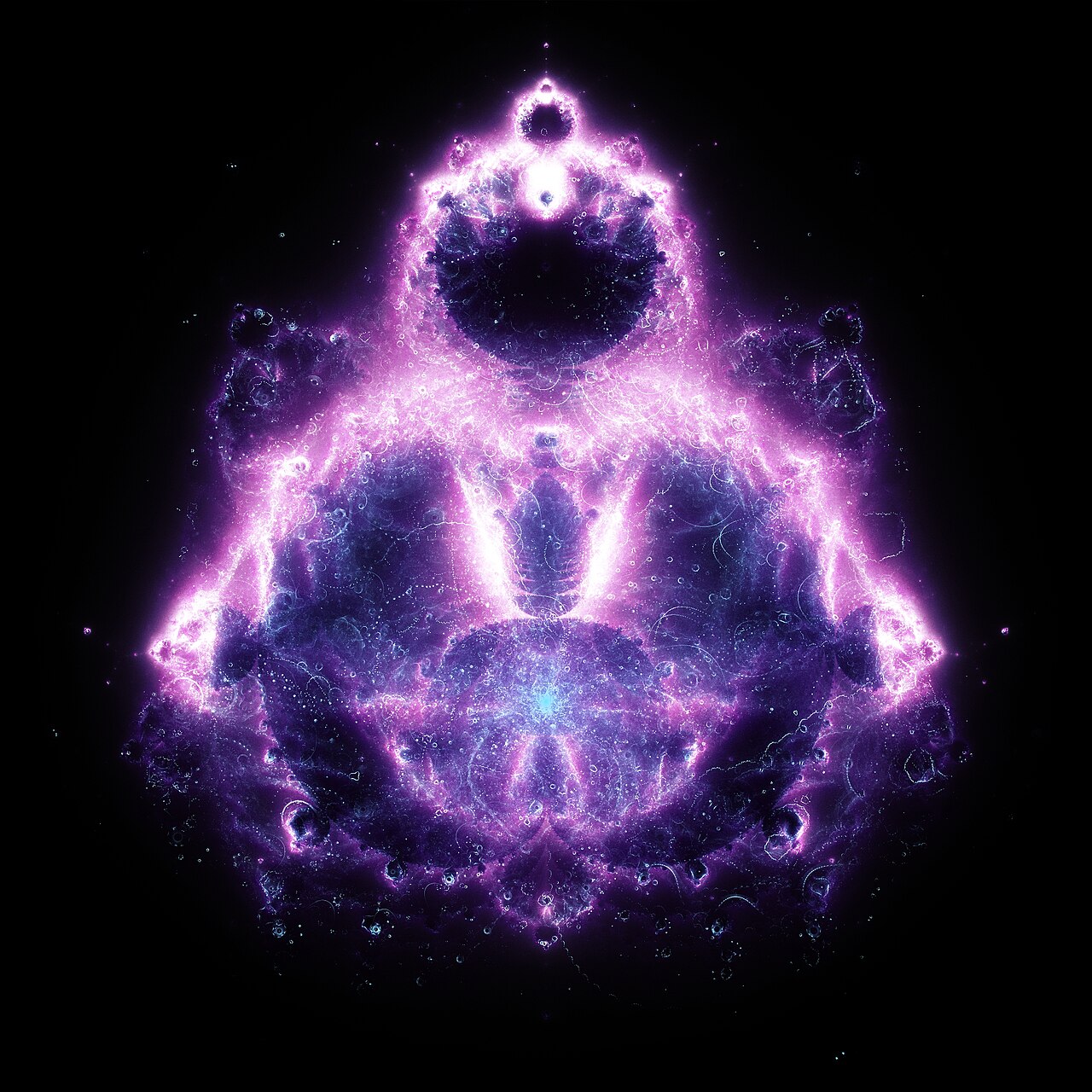
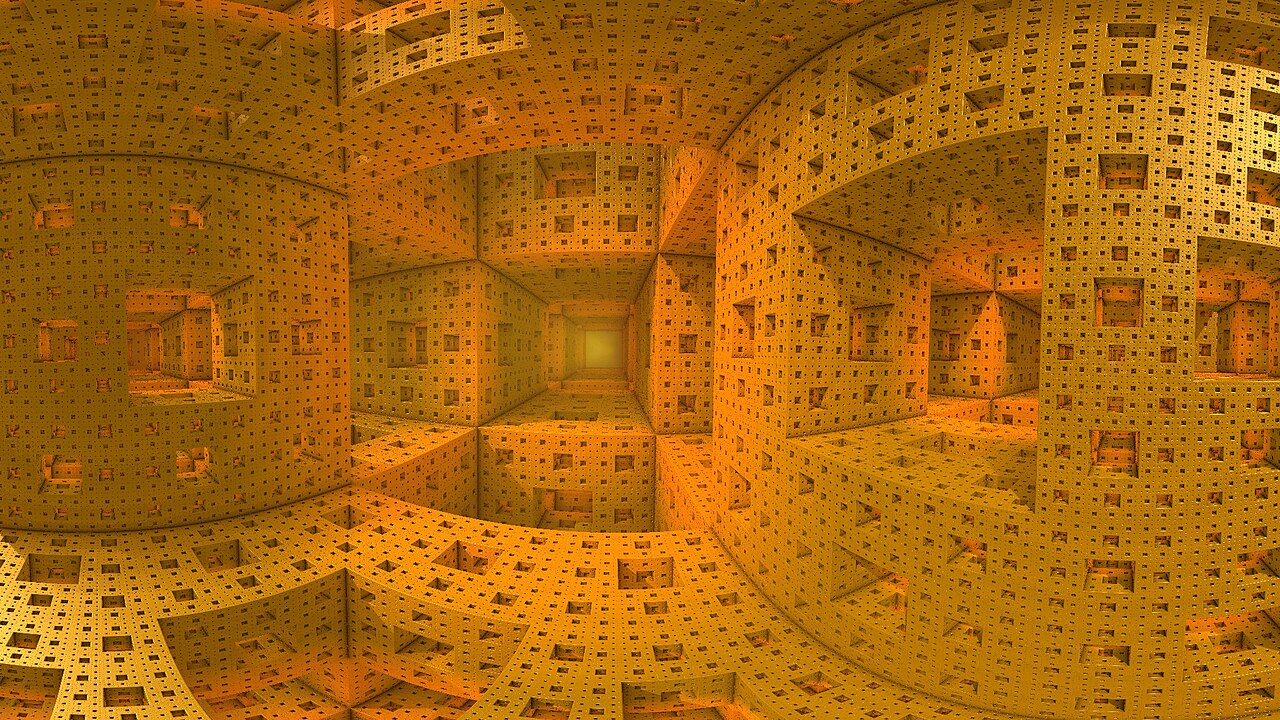
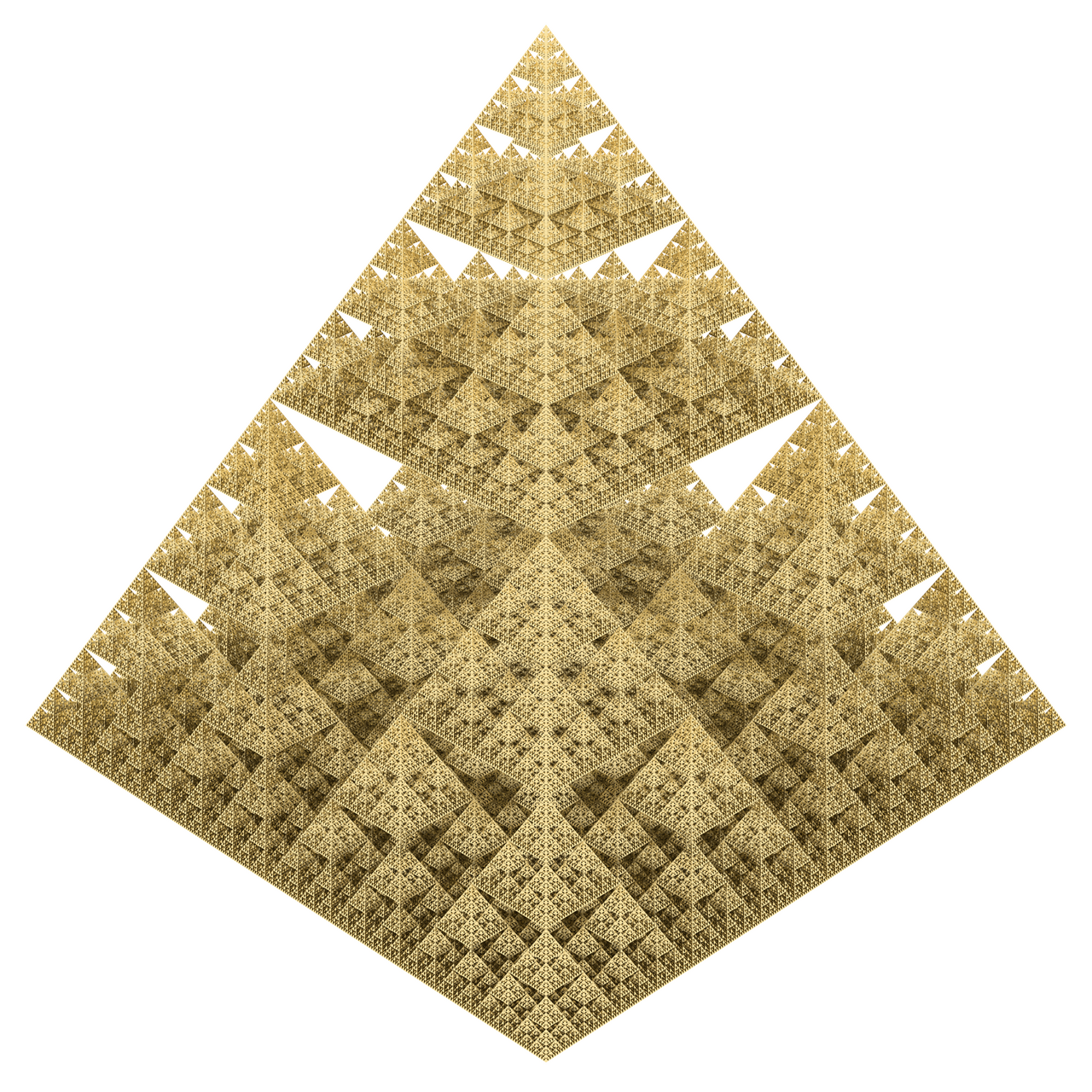
Fractal patterns are often used in art, especially digital art. Artists use iteration, symmetry, and colour to turn simple mathematical rules into images with extraordinary depth and detail. The seven mathematical visualisations below show just how varied the results can be.
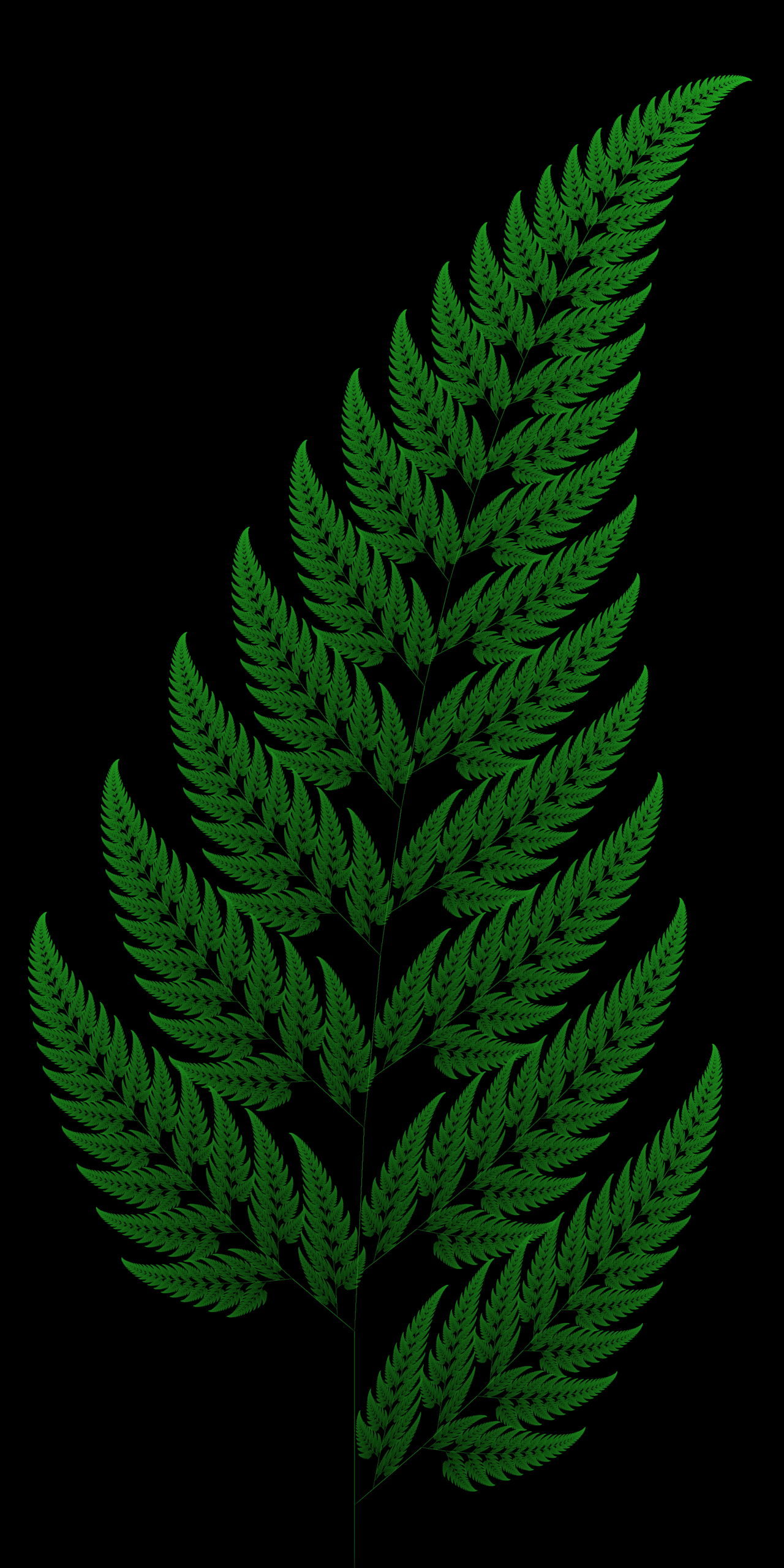
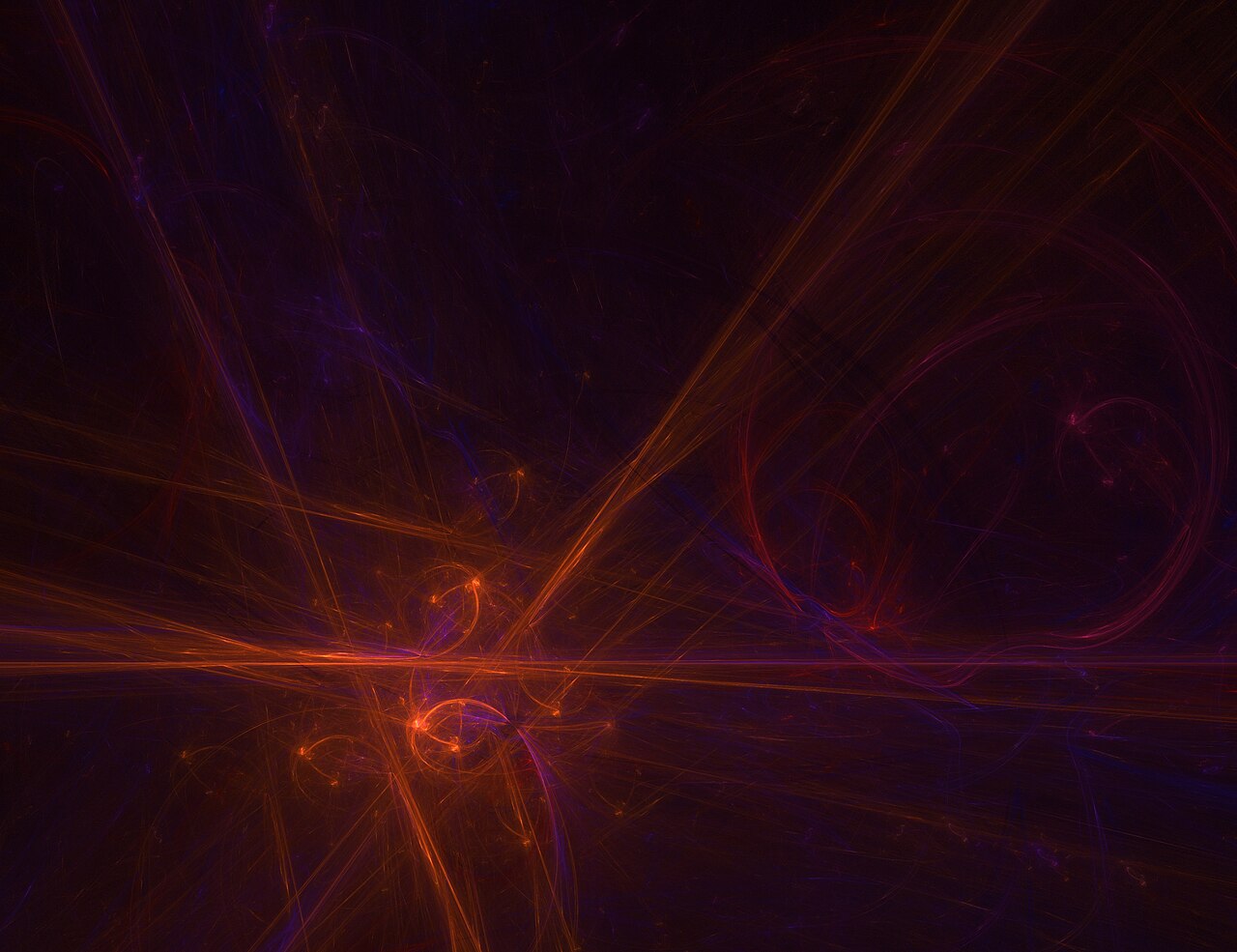
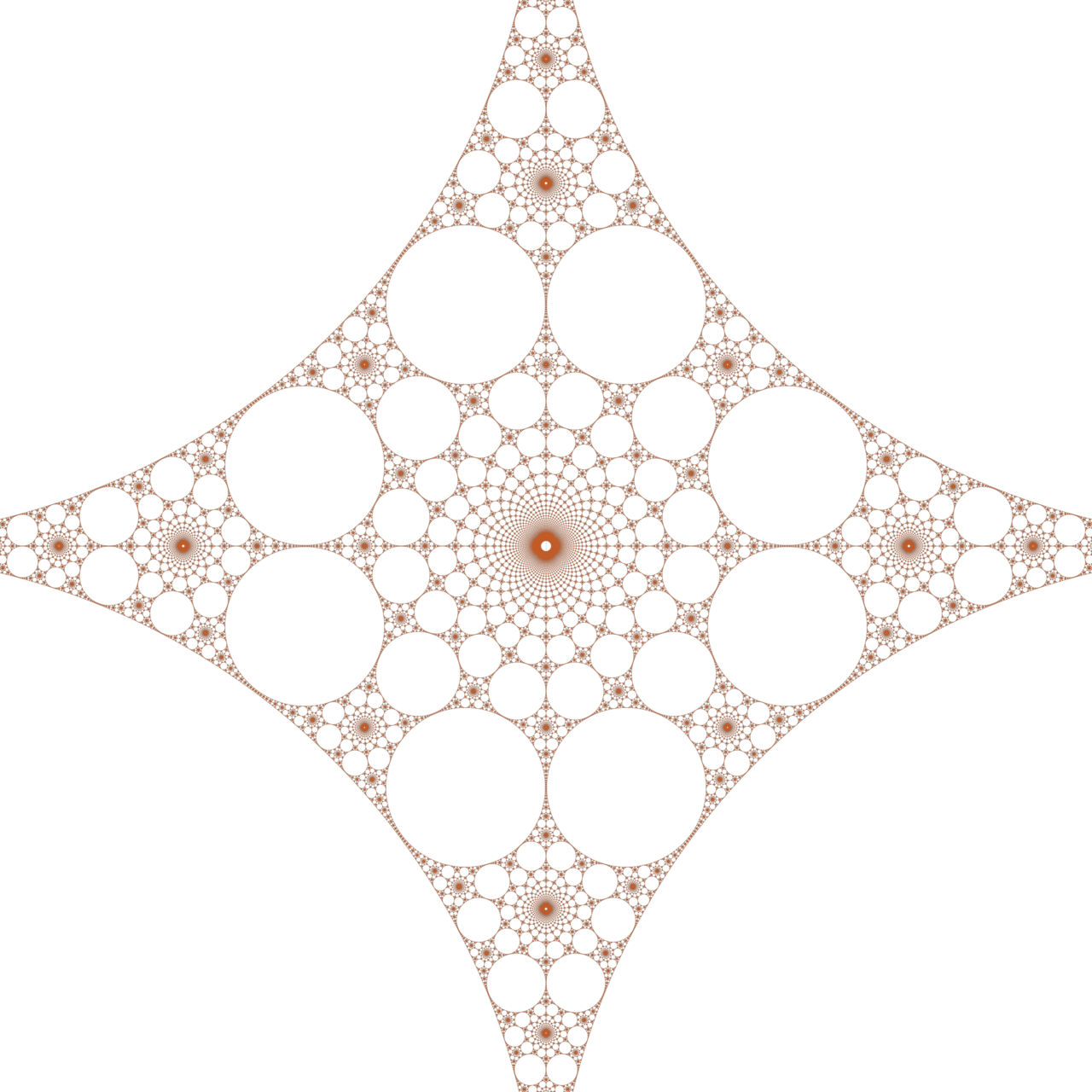
An example of a self-similar fractal
The Sierpiński gasket
Start with an equilateral triangle, join the midpoints of its sides to form four smaller congruent triangles, remove the central triangle, and repeat the process on each of the three remaining triangles. Use the controls below to watch the pattern emerge, one construction level at a time.